
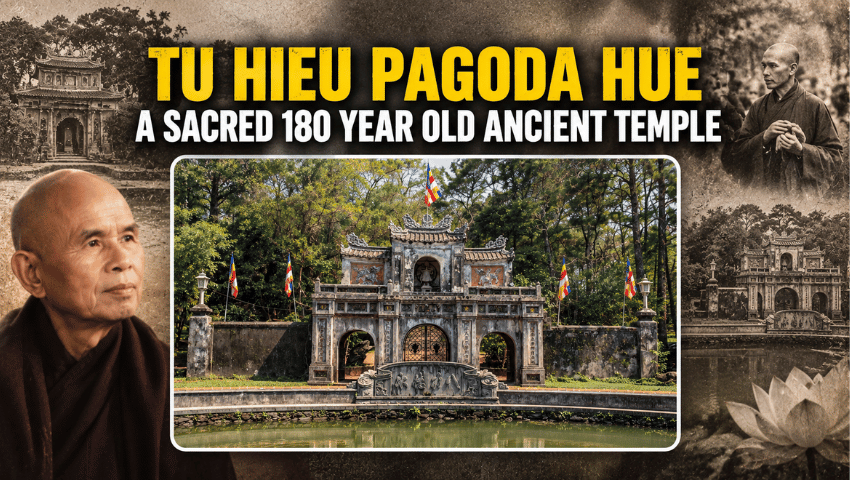
Tu Hieu Pagoda is a historic Buddhist temple in Hue, known for its peaceful pine-covered setting, long connection with Vietnamese Buddhism, and more than 180 years of history. Beyond its ancient architecture, the pagoda is closely associated with the Nguyen Dynasty, the royal eunuchs of Hue, and Zen master Thich Nhat Hanh, making it one of the city’s more distinctive cultural and spiritual sites.
Unlike some of Hue’s larger and more frequently visited monuments, Tu Hieu offers a quieter experience. Visitors can walk through the temple grounds, see traditional Buddhist architecture, explore the surrounding landscape, and learn about the stories that shaped this historic pagoda.
Table of Contents
Tu Hieu Pagoda Overview
Tu Hieu Pagoda is a historic Buddhist temple in Hue, Vietnam, founded in 1843 and now more than 180 years old. Set among pine trees in Thuy Xuan, the pagoda is known for its peaceful atmosphere, traditional Buddhist architecture, connection with the Nguyen Dynasty, and association with Zen master Nhat Dinh and Thich Nhat Hanh
- Location: Duong Xuan Thuong III Hamlet, Thuy Xuan Ward, Hue City, Vietnam
- Opening hours: 6:00 AM – 6:00 PM
- Entrance fee: Free
How to get there
Tu Hieu Pagoda is about 5 km southwest of Hue city center and can be reached easily by motorbike, taxi, private car, or as part of a guided Hue tour. From central Hue, travelers can follow Le Ngo Cat Street toward Thuy Xuan before continuing to the pagoda. Because Tu Hieu is close to Tu Duc Tomb and Thuy Xuan Incense Village, it is convenient to combine the three attractions into a half-day itinerary.
The Story Behind Tu Hieu Pagoda
From a Small Hermitage to a Historic Pagoda
The story of Tu Hieu Pagoda began in 1843, when Zen Master Nhat Dinh established a small hermitage called An Duong in the hills of Duong Xuan. He lived there as a monk while caring for his elderly mother. According to local tradition, when she became seriously ill and needed nourishing food, Nhat Dinh would make the difficult journey down the hills to catch fish or buy meat, then return to prepare food for her.
His actions soon became the subject of gossip. People who saw a Buddhist monk buying meat and fish could not understand why someone devoted to Buddhist practice would appear to go against the principle of vegetarianism. Nhat Dinh was therefore misunderstood and criticized, with some people questioning whether he was truly following the life of a monk. He reportedly ignored the criticism and continued caring for his mother. The story eventually reached Emperor Tu Duc, who sent officials to investigate. When the truth became known—that the food was intended to nourish his sick mother while Nhat Dinh himself continued his religious practice—the emperor was deeply moved by his devotion.
The story of Nhat Dinh’s care for his mother became closely associated with the meaning of Tu Hieu, reflecting the Vietnamese value of filial devotion. After Nhat Dinh died in 1847, eunuchs serving in the Nguyen imperial court petitioned for royal support to expand the small hermitage. In 1848, the site developed into a larger pagoda, gradually becoming the historic Buddhist complex known today as Tu Hieu Pagoda.
The Nguyen Dynasty and the Royal Eunuchs
A group of royal eunuchs contributed to the temple and its development, and a cemetery was later established within the pagoda grounds for their burial. Today, the royal eunuch cemetery remains one of the most distinctive historical features visitors can see at Tu Hieu.
For travelers exploring Hue’s imperial heritage, this provides a different perspective from the grand palaces and royal tombs. Instead of focusing only on emperors, the site also tells the story of people who lived and served within the Nguyen court.
Tu Hieu Pagoda and Thich Nhat Hanh
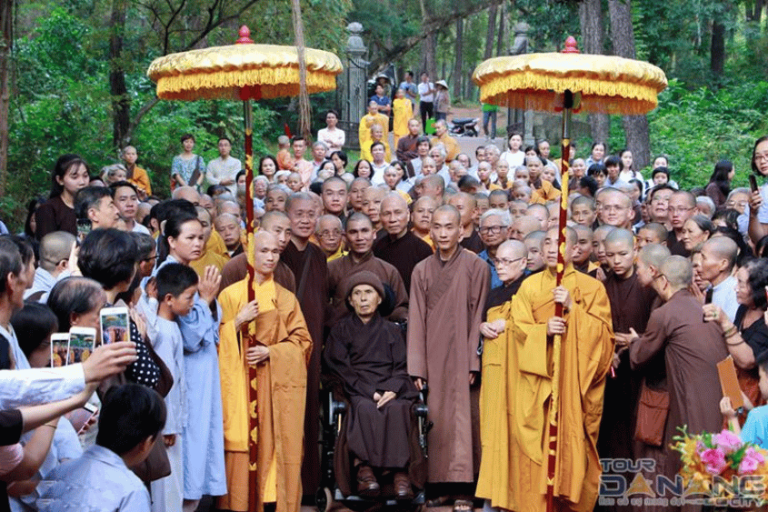
Tu Hieu Pagoda is also closely associated with Thich Nhat Hanh, the Vietnamese Zen Buddhist monk and internationally known teacher of mindfulness. He began his Buddhist training at the temple as a young monk and maintained a lifelong connection with Tu Hieu.
This connection has given the pagoda particular significance for visitors interested in Buddhism, meditation, and mindfulness. Today, Tu Hieu remains an active Buddhist community rather than simply a preserved historical attraction, allowing visitors to experience a quieter and more contemplative side of Hue.
Things to see at Tu Hieu Pagoda
What makes Tu Hieu Pagoda particularly interesting is the way several layers of Hue’s history come together in one place. Instead of a single monumental building, visitors find a large forested complex with traditional architecture, Buddhist monuments, royal-era history, and quiet spaces that are still used by the monastic community today.
The Moss-Covered Triple Gate and Pine Forest
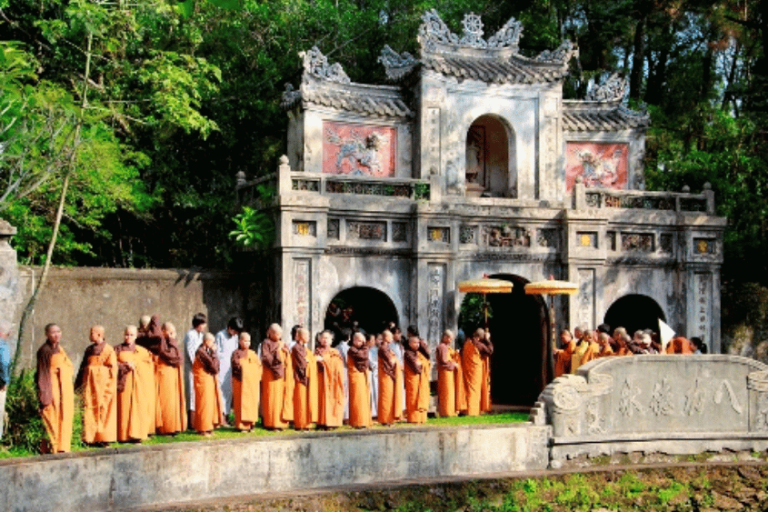
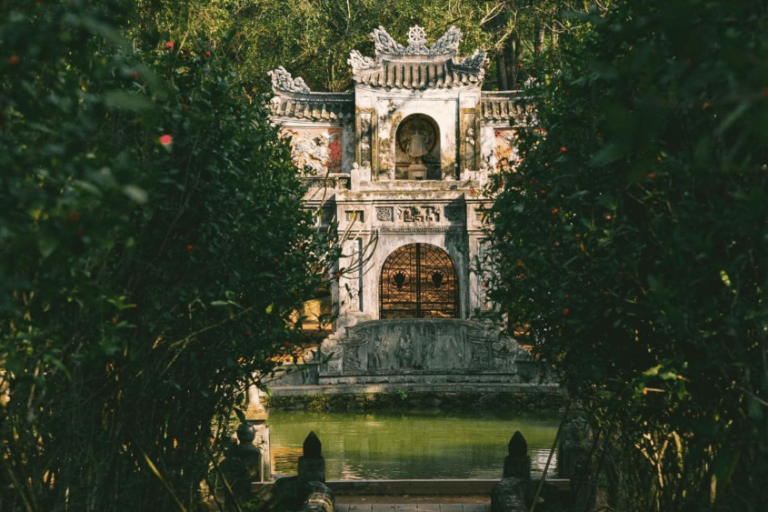
The approach to Tu Hieu Pagoda is part of the experience. Rather than opening directly onto a busy street, the main three-entrance gate appears after a winding path shaded by pine trees and mature vegetation.
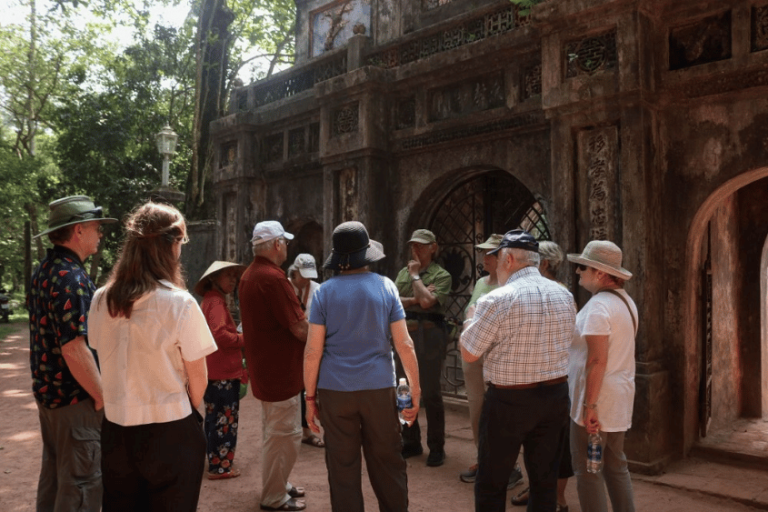
The gate itself is a striking example of traditional Hue temple architecture, with a tiled roof and decorative details. Its setting is what makes it particularly memorable: the old gate, trees, pathways, and water are arranged as one landscape rather than as separate attractions.
For photographers, this is one of the most atmospheric views of the pagoda. The combination of moss, aged architecture, and greenery gives the entrance a distinctly old-Hue character.
The Half-Moon Pond and Lotus Landscape
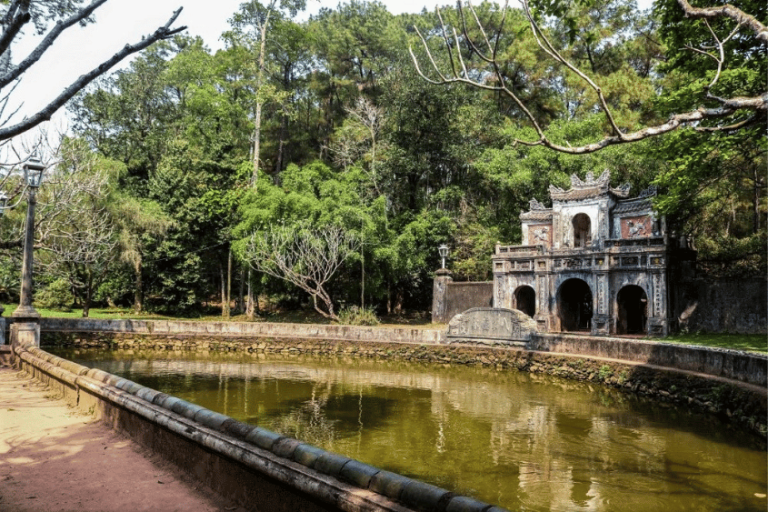
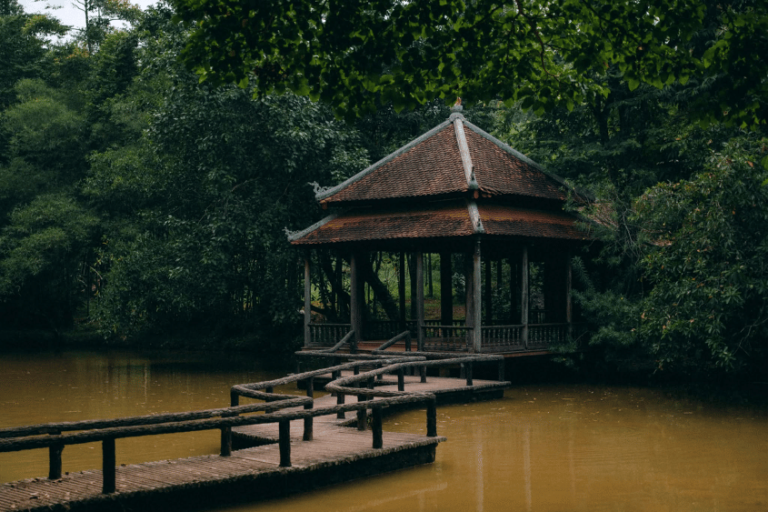
Just beyond the gate is a half-moon pond, creating a visual transition between the entrance and the main temple. The pond was developed in the early 20th century and is surrounded by trees and traditional structures.
The water is more than a decorative feature. It helps create the calm, enclosed landscape that characterizes Tu Hieu. From here, visitors can follow the tree-lined path toward the main sanctuary, with the pond and surrounding vegetation gradually giving way to the temple buildings.
This is one of the places where Tu Hieu feels very different from the more monumental attractions of Hue. The architecture does not dominate the landscape; it sits within it
Visit the Eunuch Cemetery
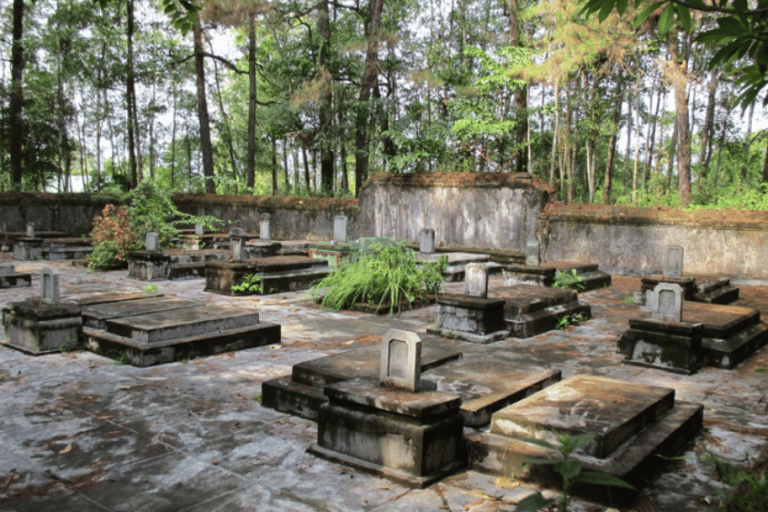
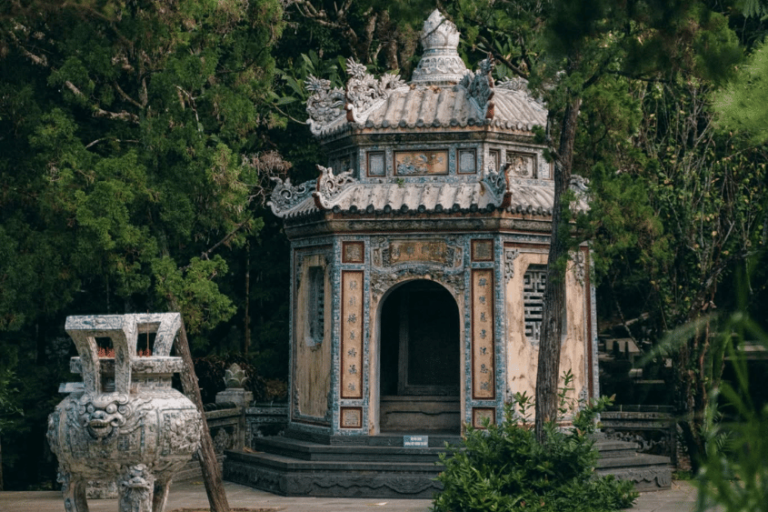
One of the most distinctive features of Tu Hieu Pagoda is its cemetery for Nguyen Dynasty eunuchs. These men served in the imperial court but often had no family or descendants to care for them after death. Some therefore contributed to the pagoda during their lifetime, helping secure a place where they could be buried and remembered. The cemetery is now home to around 25 graves, making it a rare surviving trace of this little-known group in Hue’s royal history.
Walking through the cemetery offers a different perspective on the Nguyen Dynasty beyond emperors and royal tombs. The simple tombstones, old inscriptions, and quiet surroundings reflect the lives of people who spent their years serving inside the imperial court. Visitors can take a moment to read the inscriptions, pay their respects, or simply observe this unusual historical corner of the pagoda.
Admire the Ancient Main Hall and Royal-Era Details
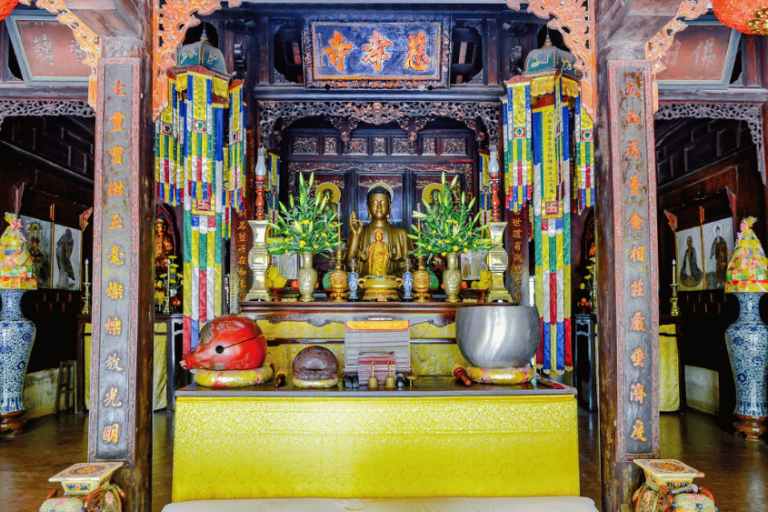
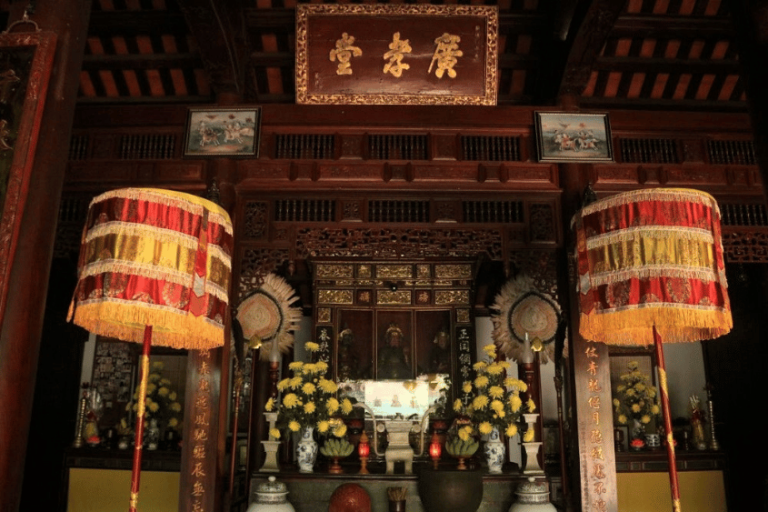
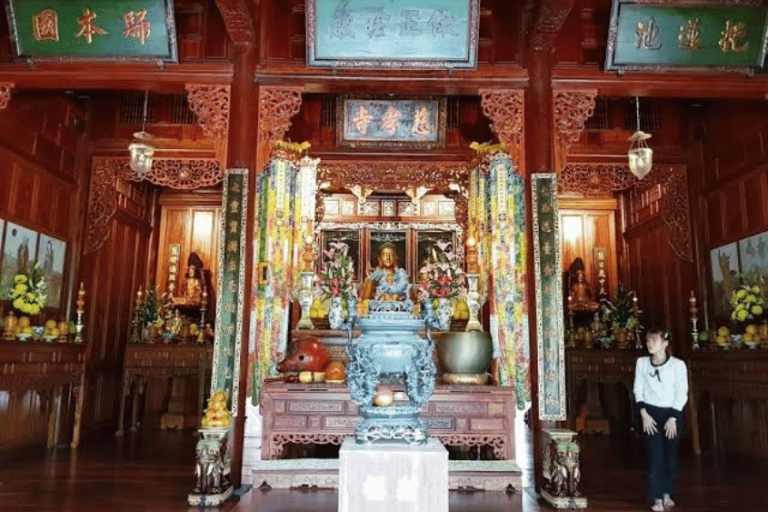
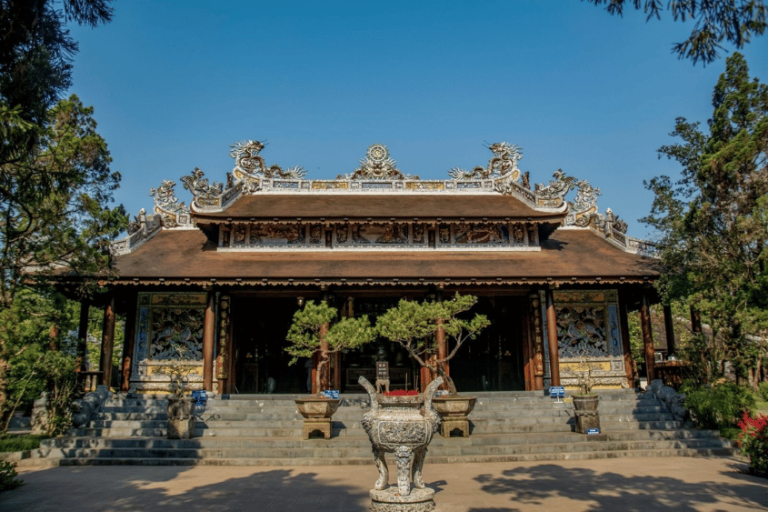
The main sanctuary is one of the best places to see the architectural character of old Hue. Its tiled roof, wooden structure, carved beams, and decorative motifs combine traditional Vietnamese Buddhist design with artistic influences associated with the Nguyen period. Inside, visitors can also see Buddhist images, ancestral tablets, incense burners, and the temple’s system of horizontal lacquered boards and parallel couplets.
Two hexagonal stone stele pavilions stand in front of the sanctuary and preserve inscriptions related to the pagoda’s history and benefactors. These smaller monuments are easy to overlook, but they are among the most useful details for understanding how Tu Hieu developed over time rather than simply admiring it as an old temple.
What to Combine with Tu Hieu Pagoda
Tu Hieu Pagoda can easily be added to a half-day itinerary around southwestern Hue. The most natural combination is Tu Duc Tomb, located nearby, followed by Thuy Xuan Incense Village, where visitors can see the traditional craft of making colorful incense sticks.
For a broader cultural experience, you can also combine Tu Hieu with other attractions in a Hue city tour. This allows you to experience several different sides of the city in one day, from imperial heritage and traditional crafts to Buddhist culture and the quieter landscapes surrounding the former royal capital.
Tips for Visiting Tu Hieu Pagoda
- Dress modestly: Cover your shoulders and knees when entering the main temple and other religious areas.
- Keep your voice low: Tu Hieu is an active Buddhist monastery, so avoid loud conversations, music, or disruptive behavior.
- Remove your shoes when required: Follow signs or instructions before entering specific worship areas.
- Ask before taking photos: Be especially discreet around monks, worshippers, and ongoing religious ceremonies.
- Visit early or late in the day: Morning and late afternoon are generally more comfortable for walking around the large, tree-covered grounds.
- Allow at least 45–60 minutes: Give yourself enough time to see the main temple, royal eunuch cemetery, stupas, and surrounding gardens without rushing.
- Opening Hours 6:00 AM–6:00 PM
- Entrance Fee Free
Wanna to explore this place?


DMZ Historic Guided Tour 1 Day – Small Group
Participating in the DMZ guided tour from Hue is a chance to explore the war sights and learn their history. Additionally, you will be amazed to learn about the indomitable spirit of heroes during the battles of the American and Vietnamese wars.
Transfer by Jeep Car from Hue to Hoi An
Transfer by Jeep Car from Hue to Hoi An Full Day Tour Transfer between Hue and Hoi An by Jeep is really an interesting way compared to using car or motorbike. With our open-top Jeep, you will spend less time looking at the road, have the best view and more time enjoying the scenery.
Sunset in Tam Giang Lagoon Guided Tour
Explore Tam Giang Lagoon from Hue on a sunset tour. Enjoy breathtaking lagoon views, local fishing culture and an authentic experience with a local guide.


