
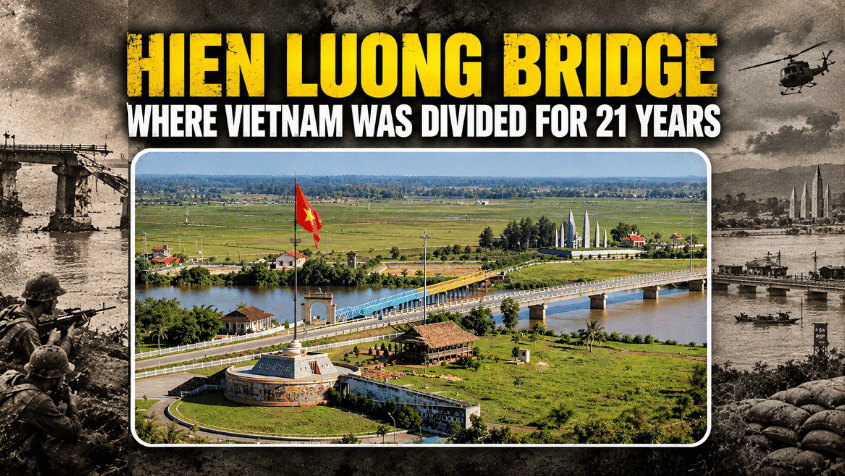
Hien Luong Bridge is a historic bridge over the Ben Hai River in Quang Tri, Central Vietnam. From 1954 to 1975, this area became part of the line that separated North and South Vietnam, making the bridge one of the most important historical landmarks of the former Vietnam DMZ.
Today, the restored bridge and surrounding historical site help visitors understand what happened during those 21 years and how Vietnam was eventually reunified.
If you are traveling from Hue to the DMZ, Hien Luong Bridge is an important stop for understanding the history behind the places you are visiting.
Table of Contents
Hien Luong Bridge Overview
- Location: Hien Luong, Quang Tri Province, Vietnam
- Historical site: Hien Luong–Ben Hai Special National Historical Relic
- Opening hours: 7:00 AM–6:00 PM according to current official tourism information
- Entrance fee: 50.000 VND/ adult & 20.000 VND/ child
- Recommended time: Allow around 30–60 minutes for a focused visit, or longer if you explore the exhibition areas in detail beyond the former dividing line.
Hien Luong Bridge crosses the Ben Hai River in Quang Tri Province, Central Vietnam. It is part of the Hien Luong–Ben Hai Special National Historical Relic, a larger historical area that includes the bridge, river, flagpole, monuments, and exhibition spaces.
The site became important after the Geneva Accords in 1954, when Vietnam was temporarily divided into two military zones. The Ben Hai River became part of the dividing line, and Hien Luong Bridge became a visible symbol of that separation.
The division was intended to be temporary, but it lasted until 1975.
Today, visitors can walk around the historical site, see the restored bridge, look across the Ben Hai River, and learn about the people and events connected with the former dividing line.
Why Is Hien Luong Bridge Important in Vietnam’s History?
To understand the bridge, you first need to understand what happened to Vietnam after 1954.
The 17th Parallel and the Ben Hai River
In 1954, the Geneva Accords brought an end to the First Indochina War and created a temporary division between the northern and southern zones of Vietnam.
The 17th Parallel was used as the general reference for this division. In this area, the Ben Hai River became part of the dividing line.
Hien Luong Bridge crossed the river at this important location.
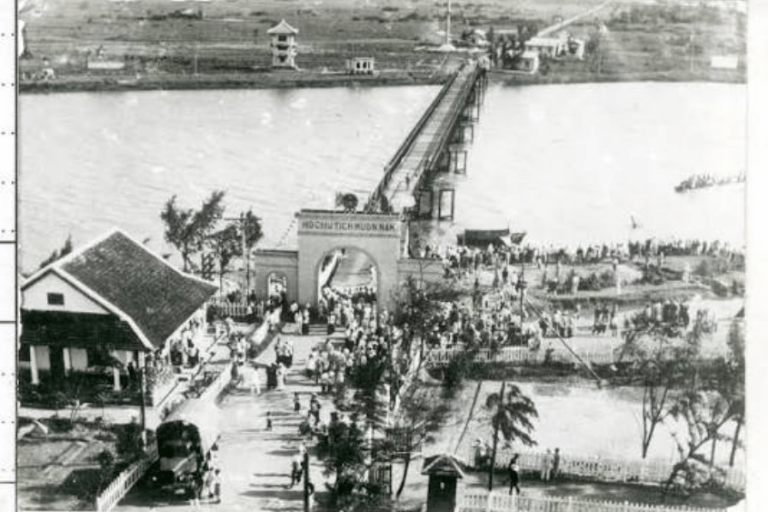
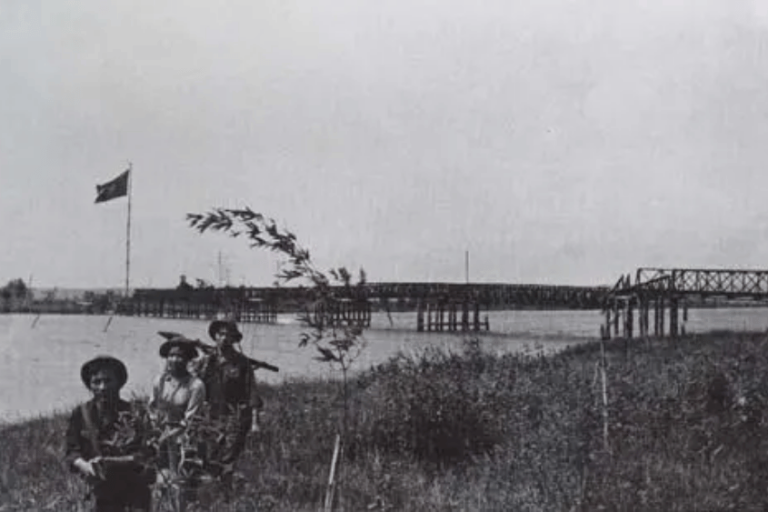
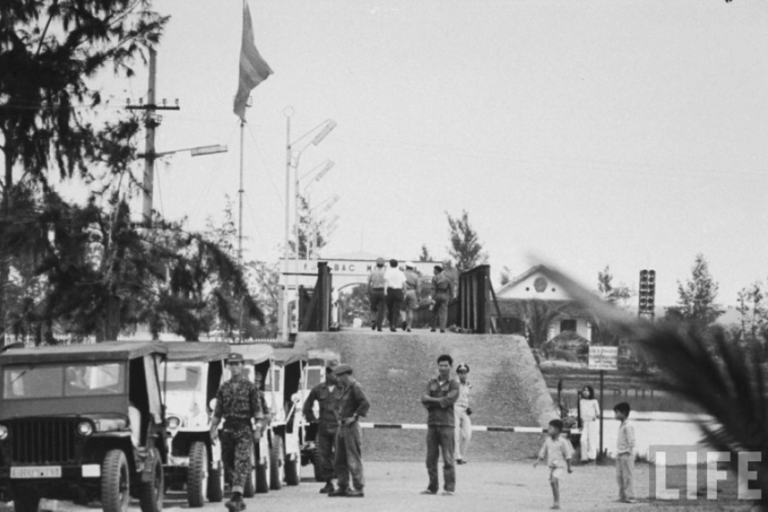
For many years, people could not freely cross the bridge from one side to the other. The bridge and the river became a powerful symbol of a country separated into two parts.
It is important to understand that this was a temporary military division, not the creation of two permanently separate countries.
What Happened Here from 1954 to 1975?
For 21 years, Hien Luong Bridge stood in the middle of this divided landscape.
The two sides used the bridge and surrounding area not only for military purposes but also for symbolic and political competition.
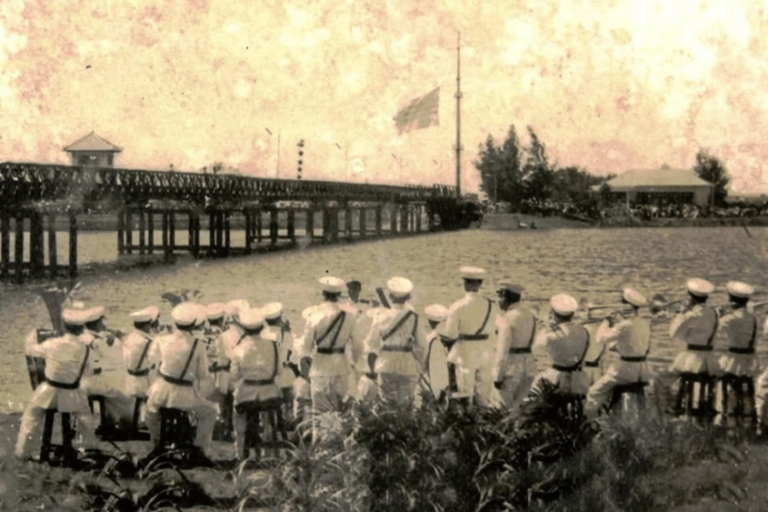
One of the most visible examples was the use of flags. The two sides competed to display their flags prominently, while different colors were used on the bridge.
Loudspeakers were also used to broadcast messages across the river. These activities became part of the wider struggle surrounding the dividing line.
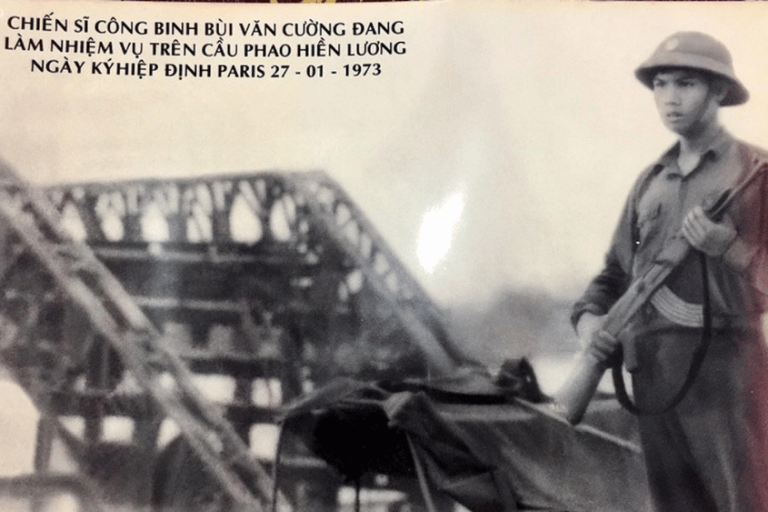
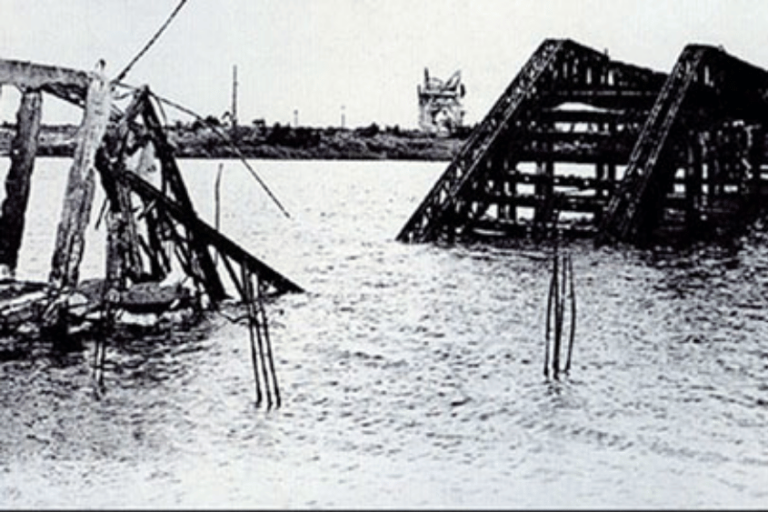
The bridge itself was damaged during the war and was eventually destroyed by bombing in 1967. When you visit today, you are therefore not simply looking at an old bridge. You are seeing a place that once stood at the center of a divided country.
Things to see at Hien Luong Bridge
The bridge is the main attraction, but there is more to see around it.
The entire historical site helps visitors understand how the area looked and functioned during the years of division.
The Historic Hien Luong Bridge
The historic Hien Luong Bridge is the main landmark of the site.
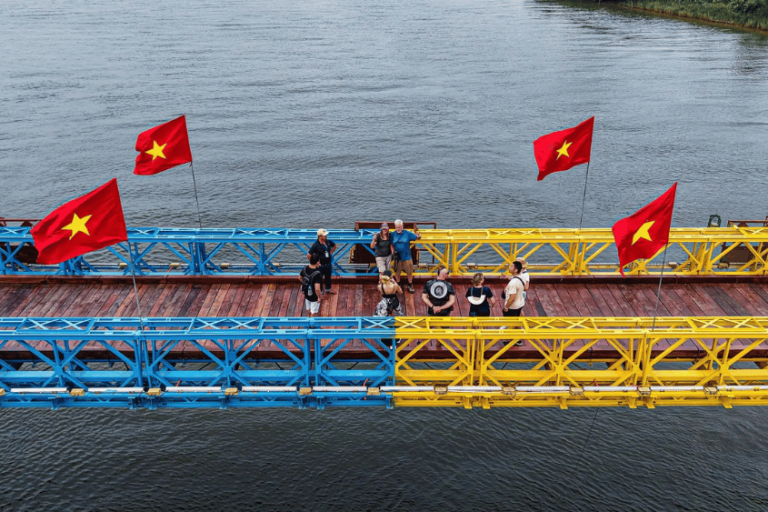
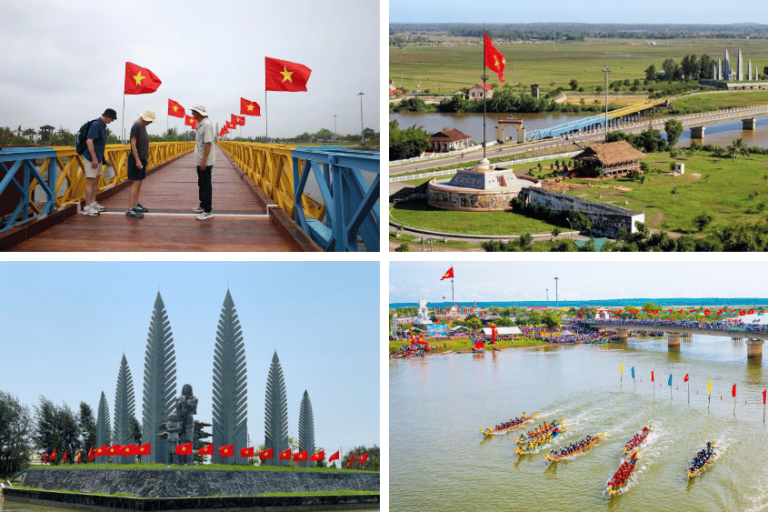
The bridge you see today is a restored version of the historical bridge associated with the period of Vietnam’s division. One of its most recognizable features is its blue and yellow color scheme.
During the years of division, different colors were used on the two sides of the bridge, visually reflecting the separation between the northern and southern zones. The contrasting colors made the division visible even to people standing on the riverbank.
Today, the blue and yellow colors help visitors understand the symbolic meaning of the bridge. It was not simply a way to cross the Ben Hai River; it became a powerful physical reminder of a country divided for more than two decades.
Hien Luong Flagpole
The Hien Luong Flagpole is another important landmark within the historical site.
During the period of division, flags became powerful political symbols at Hien Luong. The two sides competed to display their flags prominently, making the flagpoles an important part of the symbolic struggle around the dividing line.
Today, the flagpole remains one of the most recognizable features of the site. It helps visitors understand that the division was not only a physical separation across the river but also a highly visible political and symbolic conflict.
The Ben Hai River
The Ben Hai River is central to the history of Hien Luong Bridge.
Today, the river is peaceful and surrounded by a quiet rural landscape. During the years of division, however, it became part of the temporary military demarcation line associated with the 17th Parallel.
Standing beside the river allows visitors to see the geography behind the historical events. The bridge, riverbanks, and surrounding landscape make it easier to imagine how a relatively small river became such an important dividing line.
This is also why visiting Hien Luong Bridge in person can offer more context than simply seeing photographs of the site.
Statue of the Desire for Reunification
The Statue of the Desire for Reunification represents the strong desire for national reunification and peace after Vietnam was divided for more than two decades.
Located within the Hien Luong–Ben Hai historical site, the monument reflects the hopes of people who lived through the years of separation and longed for their families, communities, and country to be reunited.
Its meaning is closely connected to the history of Hien Luong Bridge. While the bridge and Ben Hai River represent the physical division of Vietnam, the statue represents the hope for reunification that continued throughout that period.
The monument therefore adds another perspective to the site: Hien Luong is not only a place that tells the story of separation, but also a place that remembers the desire to overcome that separation and restore national unity.
How to Visit Hien Luong Bridge
Visiting Hien Luong Bridge from Hue
Hien Luong Bridge is about 100 km from Hue, with the journey taking roughly 2.5–3 hours by road, depending on traffic and stops.
The most practical option for travelers staying in Hue is to visit Hien Luong Bridge as part of a DMZ day trip.
A typical route can include:
Hue – Long Hung Church – Quang Tri Ancient Citadel – Darkrong Bridge – Khe Sanh Combat Base – Hien Luong, Ben Hai – Doc Mieu Base – Vinh Moc Tunnels
Hien Luong Bridge and Vinh Moc Tunnels work particularly well together because they show two different sides of the same period of history:
- Hien Luong Bridge helps you understand the division of Vietnam and the former 17th Parallel.
- Vinh Moc Tunnels show how local civilians lived and survived during the war.
If you are interested mainly in history, this combination provides much more context than visiting Hien Luong Bridge alone.
Visiting Hien Luong Bridge from Phong Nha
Hien Luong Bridge is also convenient for travelers moving between Phong Nha and Quang Tri.
The bridge is approximately 120 km from Phong Nha, with a road journey of around 1–2 hours depending on the route and traffic.
This makes Hien Luong Bridge a useful historical stop when traveling south or north through Central Vietnam.
For travelers going from Phong Nha to Hue, you can visit Hien Luong Bridge and other Quang Tri DMZ sites along the way before continuing south to Hue.
A private car is particularly convenient for this route because you can control your departure time and spend longer at the historical sites that interest you.
Frequently Asked Questions About Hien Luong Bridge
Where is Hien Luong Bridge?
What is Hien Luong Bridge famous for?
What places can I visit with Hien Luong Bridge?
Hien Luong Bridge can be combined with several important historical sites in Quang Tri. Vinh Moc Tunnels is one of the most relevant combinations because it shows how civilians lived underground during the war. You can also visit Quang Tri Citadel for more wartime history, Khe Sanh to learn about the military history of the western DMZ, or Dakrong to explore the wider landscape of the former DMZ.
What can I see at Hien Luong Bridge?
- Opening Hours 7:00 AM–6:00 PM
- Entrance Fee 50,000 VND/adult
Wanna to explore this place?


Cooking Class at Madam Thu Restaurant
Love Hue cuisine and want to learn how to create its most iconic dishes? Join the “From Market to Table” cooking class with Madam Thu!
Transfer by Jeep Car from Hue to Hoi An
Transfer by Jeep Car from Hue to Hoi An Full Day Tour Transfer between Hue and Hoi An by Jeep is really an interesting way compared to using car or motorbike. With our open-top Jeep, you will spend less time looking at the road, have the best view and more time enjoying the scenery.-
Trekking Bach Ma 1 Day Guided Tour – Group Tour
Bach Ma National Park is a must-visit destination for nature enthusiasts traveling to Hue. With this guided tour, you’ll have a memorable and fulfilling adventure!


