
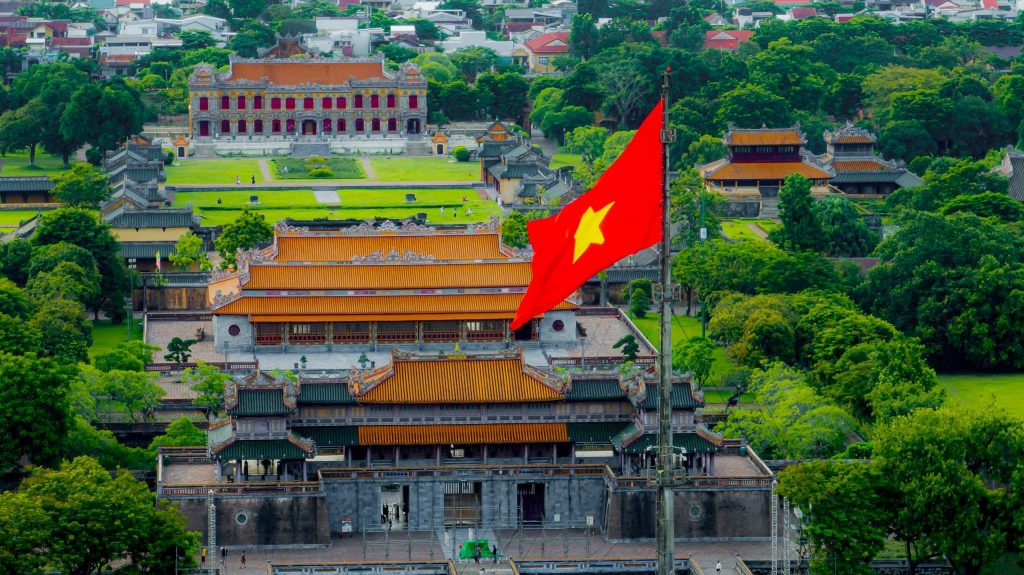
Hue Imperial Citadel, also known as Hue Imperial City or Dai Noi, was the royal center of the Nguyen Dynasty, Vietnam’s last imperial dynasty. Located within the larger Hue Citadel, it preserves important palaces, temples, ceremonial spaces and the remains of the Forbidden Purple City. Hue became the capital of unified Vietnam in 1802 and remained the political, cultural and religious center of the Nguyen Dynasty until 1945. The Complex of Hue Monuments was inscribed as a UNESCO World Heritage Site in 1993.
For first time visitors, the Imperial Citadel is one of the best places to understand Hue’s royal heritage because its layout, architecture and surviving monuments reveal how the Nguyen court organized its political and private life.
Table of Contents
What is the Hue Imperial Citadel
The term Hue Imperial Citadel is commonly used by travelers to refer to the walled royal complex known locally as Dai Noi or the Imperial City.
It is important to distinguish the different layers of the historic capital. The wider Hue Citadel enclosed the imperial capital, while the Imperial City formed the principal royal and administrative area inside it. At the center was the Forbidden Purple City, which served as the private residential area of the emperor and royal family.
Today, visitors can walk through the surviving gates, courtyards, palaces, temples and gardens to see how the Nguyen court functioned and how the royal complex was organized around a central axis.
Why is Hue Imperial Citadel a must-see when you’re here?
Hue Imperial Citadel stands as a testament to Vietnam’s imperial history, combining breathtaking architecture with a profound cultural narrative. Visitors are treated to an unparalleled journey through the well-preserved palaces, temples, and military structures of this ancient capital. To make the most of your trip, here’s an in-depth guide covering everything you need to know about this remarkable landmark.
Essential Information: Location, Hours, and Fees
Location:
23 Thang 8 Street, Thuan Hoa Ward, Hue City. The Hue Imperial City is located on the northern bank of the Perfume River, in central Hue
Ticket Prices:
- Adults: 200,000 VND
- Children (7–12 years): 40,000 VND
Opening Hours:
- Summer: 6:30 AM – 5:30 PM
- Winter: 7:00 AM – 5:00 PM

Historical Highlights of Hue Imperial Citadel
Constructed in 1805 under Emperor Gia Long, the citadel required the efforts of tens of thousands of workers over several years. By 1832, during the reign of Emperor Minh Mang, additional fortifications and defensive walls were completed, solidifying its status as both a cultural and military hub.
Serving as Vietnam’s capital until 1945, Hue Imperial City has witnessed pivotal moments in the nation’s history, blending its role as a royal residence with its significance as a strategic stronghold.
Architectural Marvels: A Glimpse into the Past
Spanning over 500 hectares, the Imperial City features a near-square layout with defensive walls, gates, and intricate waterways. Its design blends French fortress architecture with traditional Eastern principles. Highlights include:
- 13 Main Gates: Two of which are water-accessible.
- Ngo Mon Gate: The grand southern entrance to the city.
- Imperial Citadel (Hoang Thanh): Home to royal residences, administrative offices, and worship sites.
- Forbidden Purple City (Tu Cam Thanh): The private quarters of the emperor and royal family.
Getting to Hue Imperial Citadel
Hue is easily accessible by motorbike, bus, train, or plane. Once in the city, you can rent a motorbike or take a taxi to cross Phu Xuan Bridge and reach the Imperial City.
Hue Imperial City is a living testament to Vietnam’s imperial glory, a destination where history and culture intertwine. From its striking architecture to its vibrant traditions, it offers an unforgettable experience for all visitors.
If you are planning to visit several historical landmarks in one day, joining a Hue City Tour can be a convenient way to explore the Imperial City alongside other highlights of the former imperial capital. Guided visits also help you better understand the history, architecture and stories behind each site.
Cultural Significance: Hue’s Treasured Heritage
Hue Imperial City is renowned for its cultural preservation:
- Hue Royal Court Music: Recognized as an intangible cultural heritage by UNESCO, this music captures the artistic soul of Vietnam’s imperial past.
- Festivals and Ceremonies: Modern-day reenactments of imperial events allow visitors to step back in time.
Must-See Structures and Attractions
- Ngo Mon Gate: This majestic gateway leads into the citadel and features the iconic Ngu Phung Pavilion above it.
- Thai Hoa Palace: The ceremonial hall used for important royal gatherings.
- Duyet Thi Duong Royal Theatre: An intimate venue for traditional court performances.
- Imperial Tombs: These meticulously designed mausoleums showcase the Nguyen Dynasty’s reverence for feng shui and artistry.
Tips for Your Visit
- Dress Code: Respect the site’s cultural significance by dressing modestly.
- Comfortable Footwear: The vast grounds require plenty of walking, so wear sturdy and comfortable shoes.
- Guided Tours: Enhance your experience by opting for a guided tour to uncover the rich history and hidden details.
Exploring Beyond the Hue Imperial Citadel
Hue offers a wealth of historic landmarks to enrich your visit:
- Mausoleum of Emperor Minh Mang: Known for its serene setting and grand architecture.
- Tu Duc Tomb: A tranquil retreat blending nature and imperial elegance.
- Khai Dinh Tomb: A fusion of traditional Vietnamese and European design.
- Thien Mu Pagoda: This seven-story pagoda is an iconic spiritual and historical symbol of Hue.
For a deeper dive into the city’s charm, don’t miss the Perfume River, Dong Ba Market, or Trang Tien Bridge.
| Price per site (applied 2026) | |||||||||||||||||||||||||||||||||||
|---|---|---|---|---|---|---|---|---|---|---|---|---|---|---|---|---|---|---|---|---|---|---|---|---|---|---|---|---|---|---|---|---|---|---|---|
| |||||||||||||||||||||||||||||||||||
| Price per routine (applied 2026) | |||||||||||||||||||||||||||||||||||
| |||||||||||||||||||||||||||||||||||
| Price for interpretation | |||||||||||||||||||||||||||||||||||
| |||||||||||||||||||||||||||||||||||
Wanna to explore this place?


DMZ Tour from Hue 1 Day – Small Group
Participating in the DMZ guided tour from Hue is a chance to explore the war sights and learn their history. Additionally, you will be amazed to learn about the indomitable spirit of heroes during the battles of the American and Vietnamese wars.
Hue Cooking Class with a Local Market Experience
Discover Hue beyond its famous landmarks! Explore the lively Dong Ba Market, uncover local culinary secrets, and learn to prepare authentic Hue dishes with a local chef. Join us for a flavorful journey from market to table and experience Hue like a local!
Bach Ma National Park Trekking Tour – Group Tour
Bach Ma National Park is a must-visit destination for nature enthusiasts traveling to Hue. With this guided tour, you’ll have a memorable and fulfilling adventure!


